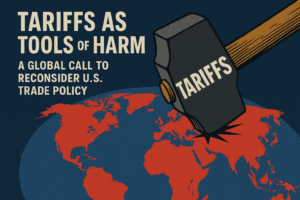
 The United States has once again thrown global trade into turmoil by imposing sweeping tariffs—abruptly announced, unevenly applied, and then partially reversed. These sudden moves are more than political theater or economic brinkmanship. They have real, human consequences.
When a major economic power weaponizes trade policy, the impact doesn’t stay in Washington boardrooms or corporate earnings reports. It hits hardest in factories and workshops around the world, where wages are low, labor protections are weak, and workers—especially migrant workers—are left with no safety net when orders dry up overnight.
At Rights Across Nations (RAN), we are alarmed by this pattern of aggressive U.S. trade behavior that disregards international norms and undermines the livelihoods of millions globally. These actions destabilize supply chains and sow fear and uncertainty across industries that rely on predictability and cooperation—not shock tariffs and headline-driven policymaking.
We’ve heard the stories firsthand: canceled orders in Southeast Asia, shuttered factories in Central America, sudden layoffs of migrant laborers whose families depend on each paycheck. These aren’t collateral damages. They are the predictable outcomes of policy decisions made with no regard for the people they affect.
The U.S. has a responsibility, like all nations, to consider the global impact of its economic actions. Trade is not just about profit margins or political leverage—it’s about people. And right now, those people are being hurt.
We call on the U.S. government to step back from this confrontational posture and re-engage with the international community in good faith. And we urge global institutions and human rights advocates to pay attention: economic disruption is a rights issue, and it demands accountability.
At Rights Across Nations, we’ll continue to speak up when powerful governments take actions that cause disproportionate harm to workers and communities around the world. Global policy must serve the people it touches—not just the interests of those who write it.